Grand View
Four shifts for one object
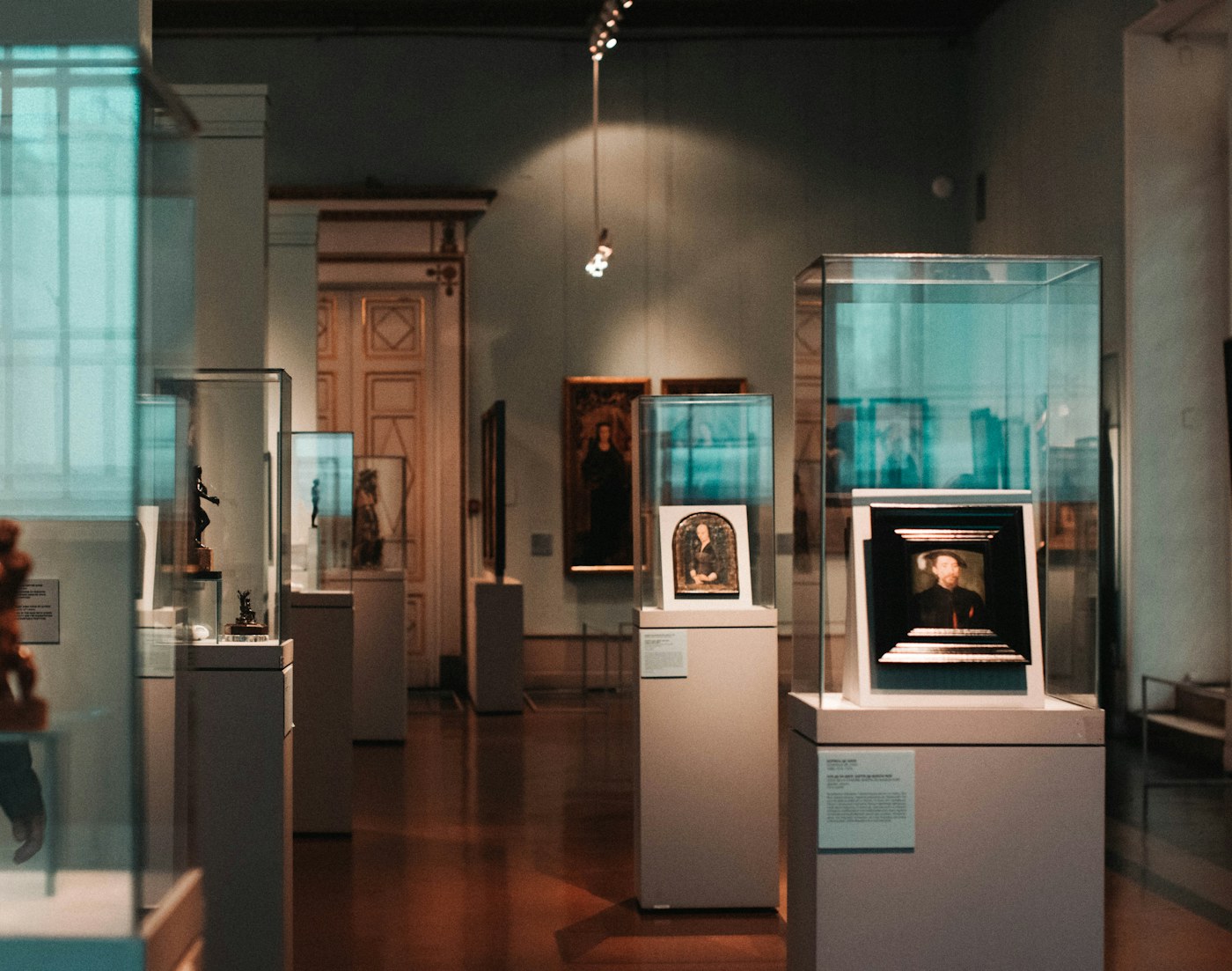
Stay with a single object long enough to let the reading move instead of replacing it with the next label.
Far
Describe its silhouette, posture and relationship to the room.
Near
Follow tool marks, pigment, joins, wear or a small inscription.
Side
Change your angle and notice what the front view concealed.
After
Ask what the display frame adds to—and removes from—the story.
Grand View
A slow inventory
A useful note is selective. It holds the evidence you saw, the connection you are testing and the question you cannot answer yet.
- Evidence: name one physical feature before interpreting it.
- Connection: compare it with a nearby material or gesture.
- Question: record what the label or display leaves unresolved.
Grand View
Comparison is a change of lens
A modest tool beside a monumental figure can redraw the scale of a room. Let contrast sharpen both objects instead of turning one into background.
Grand View
Use the official collection context
Object histories, current displays and interpretation belong to the museum and its official sources. This guide offers prompts for looking, not catalogue authority.